What’s in a name? I. Eponyms and a dark history

Ask people what they think of the use of eponyms in science and you will get a mixed response. In medicine, eponymously named syndromes, structures, processes and laws are everywhere, though there is much debate about whether they should be in routine use. Personally, I’m a big fan of eponyms – they may not be descriptive or informative as the proper terms they signify, but I think they have a certain appeal. There’s a lot of history to be unearthed when encountering an eponym for the first time, and it’s status as a tribute to the discoverer/inventor is so … wonderful!

That being said, there’s a dark side to eponyms as well, one that I recently encountered after attending a tutorial (part of the MSc Internal Medicine program) at the University of Edinburgh. The topic was sexually transmitted disease, and a syndrome known as reactive arthritis came up. This disease, which describes urethritis, conjunctivitis and arthrits, is eponymously named ‘Reiter’s syndrome’ (the eponym was not used during the tutorial, and I had wondered why not). Now, I had heard this eponym being used very often during medical school, more often in fact than the proper term for the condition, but I had never known who Reiter was. So, after the end of the tutorial I did some digging and found out that the disease was named after Hans Reiter, a German doctor who was a member of the Nazi party and was convicted of war crimes for experimenting on people in concentration camps. Apparently, over the past decade the term Reiter syndrome has fallen out of favor within the medical community, and many people who generally oppose the use of eponyms are using it as an example of why they should be abandoned. Moreover, there are several other medical eponyms with similar Nazi histories, including the Clara cell and Wegener’s granulomatosis. There has been considerable effort so far to replace the use of these terms with other, more informative titles. What this means for the future of eponyms in medicine is not yet known.

On a side note: Living in Germany, it’s interesting to observe how people react to the country’s complex and distressing past. The Charité, the main university hospital and medical school in Berlin, was once home to many convicted Nazi physicians. I’m not sure whether similar eponyms are used here for the mentioned structures and diseases, but it would be interesting to find out.

Renal struggles

It was a lovely break, but I am a bit relieved that this week teaching finally resumed at the MSc Internal Medicine, University of Edinburgh. And what better topic to begin with than my sworn enemy – nephrology. Don’t get me wrong it’s not that I don’t like it – well to tell the absolute truth I don’t, but it’s not what you think.
Renal medicine has a notorious reputation for being difficult and complex – even in medical school I dreaded everything from renal physiology to clinical nephrology lectures. The field is riddled with overlapping diagnoses, vague symptoms that can point to anything or nothing, and complex treatment regimens. I like to think that in all other branches of medicine, I can think of a single most likely diagnosis given only the patients signs and symptoms (in most cases). In renal medicine, however, I find myself stumped without an array of complicated investigations (which sometimes – who am i kidding – most of the time, leave me even more confused). Everything affects the kidney and the kidney affects everything – nightmare.
Sometimes I ponder upon whether I dislike nephrology or it dislikes me. I find it interesting that people often say that they fancy nephrology for these very same reasons. But I don’t get it – not at all. That being said, the past week went a lot smoother than I expected – we dealt with some of the more common aspects of renal medicine through a tutorial and a series of lectures. I’m proud to say this week left me feeling a little less resentful towards the kidney and its intricacies. Next week is cardiology by the way (yay!).

Think FAST and save a life!

20130120-125215.jpg

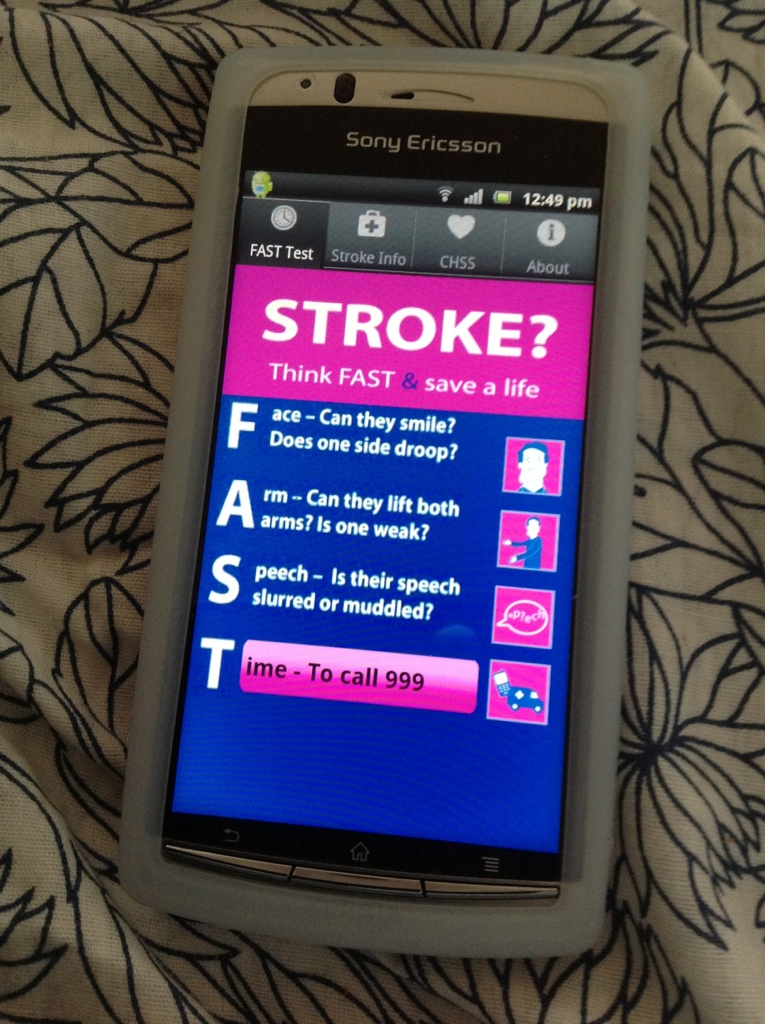
Today, while browsing through the video of summaries of recent research developments at the University of Edinburgh, I came across this wonderful app. Brilliantly simple, it is designed to help people recognize the symptoms and signs of stroke, in themselves or others. The app was designed by the Division of Clinical Neurosciences at Edinburgh, and is the first of its kind. As I’ve discussed before on this blog, early recognition of stroke symptoms is key – time is brain. Hopefully this form of public health education will lead to an improvement in the early diagnosis and treatment of stroke.

Introspection: How can neurology help anyone?

Neurology. An infinitely fascinating yet somewhat frustrating field of medicine. People often see neurologists as doctors who spend a lot of time thinking about what could be wrong with the patient, analyzing signs and symptoms and localizing the site of disease clinically with impressive accuracy, only to have little they can actually do to treat what they’ve just discovered. Thinkers but not doers, thats the general view among other doctors as well as patients sometimes. The question is, can you blame them? As the field of medicine which I have chosen to dedicate my life to, skimming through a neurology textbook or spending the day on the neurology ward can be depressing.
Now, I’m definitely no neurology expert, but it seems there are simply no curable neurological diseases. That’s ok, an optimist may say, since curable diseases in medicine are few overall. Infectious diseases aside of course. Endocrinology, cardiology, rheumatology, whichever specialty you pick, fully curable diseases are few and far between. But how about treatment? Alleviating patient symptoms and reducing the progression of disease are certainly not the same as cures, but at least these other specialties can say they do something to help. We don’t even have that in neurology.
Perhaps it’s the general complexity of the brain, and how little we know about the way it works that contribute to the lack of effective treatments to tackle it’s diseases. It’s an attractive concept to blame this fact, however the amount of knowledge that has been gained regarding the brain over the past few decades is vast, and the resulting advances in treatments have been relatively modest. It was thought before that the central nervous system cannot regenerate, and thus what is lost is lost forever. We now know that that’s not entirely true, or at least it’s not as simple as previously thought.
Ask a neurologist and they will say – how about stroke? Hmmm I thought so too until recently. In medical school I was taught about how thrombolysis (dissolving the blood clot which is blocking the brain vessels and essentially starving the dying brain tissue) is a revolutionary and effective treatment for stroke. Digging a little deeper it seems that’s not really the case. About 4% of people with stroke actually get thrombolytic therapy, once you sift out all the people who don’t receive it because they came to the hospital too late or because they have one or more of the many contraindications to the treatment. Four percent. The number of people you need to treat for one patient to benefit in a certain way from the treatment (calculated from early studies) seems to be around eight. Eight people for one person to benefit. Out of four percent. That’s really sad.
Please don’t get me wrong, I appreciate the efforts that were made by others for us to reach even this modest benefit from stroke treatment. It is, after all, better than nothing. But this is a recurring theme in neurology – treatments that are riddled with unwanted effects, or are simply not good enough in terms of combatting the disease. Parkinson’s disease? Drugs such as L-dopa that quickly lose their ability to improve symptoms, and eventually cause effects that can be worse than the disease itself. Multiple sclerosis? No standard therapy which reduces the number of attacks over a long period (Natalizumab is an exception, but it’s complicated – very complicated). I could go on.
Now, I’m not a neurologist and, like I said I’m therefore certainly no expert on the matter, but this is my general impression. I’m sure lots of people far more experienced than I can challenge me on these observations, but there’s no denying that neurology is far behind in treating its maladies relative to its fellow specialties. Anyway, I would hate to point out faults without talking about how we can perhaps change this in the future.
What needs to change? I’m not really sure, but it’s interesting to think about it. More research? Neuroscience can’t really claim to be a neglected field of research these days, but it had been for a long time. Maybe that’s why it’s so far behind. Do we need more research, just to make up for lost time? Perhaps the complexity of the brain in itself demands more of our attention. If that’s the answer, or part of it at least, then it seems I made the right choice by choosing to supplement my career in clinical medicine with scientific research. Do we need more neurologists or more researchers? Or do we need more neurologists who do a considerable amount of research? What can I, having chosen this career path, do to help?
It’s a cliché to say that I became a doctor to help people. I think it has even become a cliché to state that it’s a cliché. The truth is, that was a big part of my decision to enter medical school. Among other things (scientific curiosity, respectability, etc), the thought of helping people is perhaps the most rewarding and motivating aspect for everyone in the medical field. Treating patients and watching as they improve, sometimes dramatically, is something that every doctor needs in order to cope with the harsh mental and physical demands of our jobs.
The question now arises – why am I preoccupied with this? Am I losing faith in my career before it actually begins? Am I assuming prematurely that a life in neurology will be unrewarding and disheartening? I shudder at the thought of someone reading this blog years from now and using it as a reason not to give me that neurology training job (assuming that anyone at all reads it of course!). I would like to think, however, that this introspection on my behalf will make me better at my job. After all, logic dictates that the combination of curiosity and the appreciation of the faults of the status quo represents fertile ground upon which to strive for improvement. At least that’s what I hope.
Nature’s role in modern medicine

Whether as patients or healthcare workers, it’s easy to overlook the origins of the drugs used to treat common diseases. In the era of recombinant technology and generally complex ways to design, test and use medicines, it’s refreshing when a drug crosses our path which is derived from nature in a simple yet brilliant way. Now, there are countless examples of these stories described in scientific literature, as well as within the mainstream media. Below are a few examples which I found particularly memorable.
I distinctly remember during my pharmacology final oral exam in medical school being asked a question. It was the very last question which the examiner asked me, and I was taken slightly aback by how simple it was yet how little I had thought about it before. He had grilled me for a good fifteen minutes about angiotensin converting enzyme inhibitors, a class of drugs used for treating hypertension among other conditions. Then, as I felt the exam drawing to a close he asked ‘How were ACE inhibitors discovered?’. Now, for a pharmacy student this question would be no problem at all, as they focus a lot of their time in studying how drugs are derived and synthesized. For me however, being immensely preoccupied with a wide range of subjects, the more clinical aspects of medicinal use being just one of them, it was something which I had hardly ever thought of.
ACE inhibitors were derived in the 1960s from the venom of the Brazilian pit viper, Bothrops jararaca. The venom leads to a severe drop in blood pressure by blocking the renin angiotensin aldosterone system. It is noteworthy that this selective mechanism of action means that ACE inhibitors may not be effective for everyone in terms of lowering blood pressure. However, the drugs have several other benefits including protecting the kidneys in diabetes and improving heart function in patients with heart failure.
Another interesting drug discovery story is that of exenatide , an anti diabetic agent licensed for use in 2005. This drug was isolated from lizard (Gila monster) saliva and has been shown to stimulate insulin release from the pancreas. Unlike other drugs with the same action, exenatide only increases insulin secretion when glucose levels are high and therefore does not lead to hypoglycemia. It also has numerous other beneficial effects including promoting weight loss.
My favorite, however, is the story behind a new thrombolytic treatment for stroke. The drug, now called desmoteplase, is derived from the saliva of the vampire bat Desmodus rotundus. This new drug is still in the testing phases of development (phase III trials), but has already shown great promise. It stays in the body for a longer time than other thrombolytics, is more selective in its action and does not lead to neurotoxicity. It is possible that it may represent a breakthrough in the treatment of stroke, which is currently a highly debated and complicated issue.

20121228-123020.jpg

20121228-123015.jpg

20121228-123025.jpg

Complexities

A clinician is complex. He is part craftsman, part practical scientist, and part historian.

A quote by Thomas Addis, a pioneer in the field of nephrology who was born in Edinburgh and studied medicine there, as well as at the Charité in Berlin. One of his major contributions to clinical medicine was his emphasis on examining patients urine both with the naked eye and microscopically – which is now standard practice.

Holiday penumbras

In anticipation of my upcoming lab rotation at the Centre for Stroke Research in Berlin, I have been reading up on the focus of my project.
The ischemic penumbra is an area of a stroke patient’s brain which is dying as a result of the blockage of one of the arteries supplying the tissue. The keyword here is dying, not quite dead yet unlike the core of the tissue affected – which makes it a prime target for salvation in terms of stroke treatment. Left untreated, this penumbra transforms into dead brain tissue, and thus contributes to the patient’s permanent symptoms or neurological deficit. The region, which cannot be readily seen on more conventional imaging techniques like CT or standard MRI, was first noticed in PET scans, which basically measure the amount of energy the brain uses and maps it onto an image. Now, with the availability of more sophisticated MRI techniques such as diffusion and perfusion weighted imaging, this area can be mapped and its natural history identified, but most important is the fact that its response to treatment can be established. Simply, can this area be saved and to what degree, is the question on our minds.
The group which I am going to be working with has made much progress in this field, and what drew me to their projects most was their unique and innovative approach to the subject of stroke, which is a major killer and prominent cause of disability worldwide. For example, every doctor knows that stroke has a relatively short time window in which treatment can be given, and more importantly it is within this time window, typically around three hours from the onset of the stroke, that benefits of the treatment outweigh the risks. This time window was derived years ago from large studies which showed that only patients who received treatment within this time benefited from it. But now people are thinking of a new approach. Researchers are now trying to replace this seemingly arbitrary number of three hours with more objective and reliable criteria such as various signs on MRI, so that everyone who might benefit from treatment but falls outside of this window can have the opportunity to end up with less permanent disability than if doctors only relied on the time from stroke onset.
Needless to say I am very excited at the prospect of participating in something which has the potential to be so groundbreaking! Which is why I feel the need to be prepared, and that’s what I’m spending my holiday attempting to do. I will be posting more about this soon! 🙂

Back again …

Hello everyone! I’ve been gone a while, but now I’m back with some updates and the promise of a string of great posts in the next few weeks.
I had my Edinburgh assessment week a few weeks ago, it went smoothly, followed by my module final exam for my neuroscience course in Berlin. That also went surprisingly well, and now I have three weeks of R&R to look forward to. Well, not really.
The great news is that I flew back home to Sudan yesterday for the holidays. The ermmm … Other news is that I have a ton of stuff to do in my break, including gather some extra credit points by participating in some online courses, reading up on the topic of my upcoming lab rotation (*excitement*) and preparing for next year’s Edinburgh and Berlin modules. At least I’m looking forward to having more time to share my experiences with you via this blog this time, since I will be mainly working from home. 😀
First and foremost, I need to fix my sleeping pattern, (it’s almost 3am here) so good night!

What’s in a name? Schönleinstraße

Photo 04.12.12 00 48 09U-Bahnhof (underground train station) Schönleinstraße on the U8 in Kreuzberg, Berlin. The station is named after Johan Lukas Schönlein, German professor of medicine who taught for a while in Berlin. His name has been given to more than just this small station – he is recognized as one of the first people to describe a disease in children which involves the skin, joints and kidneys – now known as Henoch-Schönlein Purpura (HSP). He also first discovered one of the species belonging to a group of fungi known as the Dermatophytes (they love infecting skin, hair and nails), Trichophyton schönleini. Trichophyton species are considered the most common cause of Athlete’s foot (tinea pedis). Also something I found interesting is the species Trichophyton soudanense (Sudan?) – but I couldn’t find anything about the etymology of this organism online (maybe I need to dig a little deeper, all I found was that the organism is common in the Mediterranean and Africa). Perhaps I’m just a little homesick? 😦